Himalayan Shilajit Gold Resin is not a modern invention or a fleeting trend in the wellness world. Its story stretches back through the annals of history, woven into the rich tapestry of ancient cultures, traditional medicine systems, and now, increasingly, modern scientific inquiry. To truly appreciate the significance and enduring relevance of Shilajit, we must embark on a historical journey, tracing its path from its earliest recognition in ancient civilizations to its current place in contemporary wellness practices.
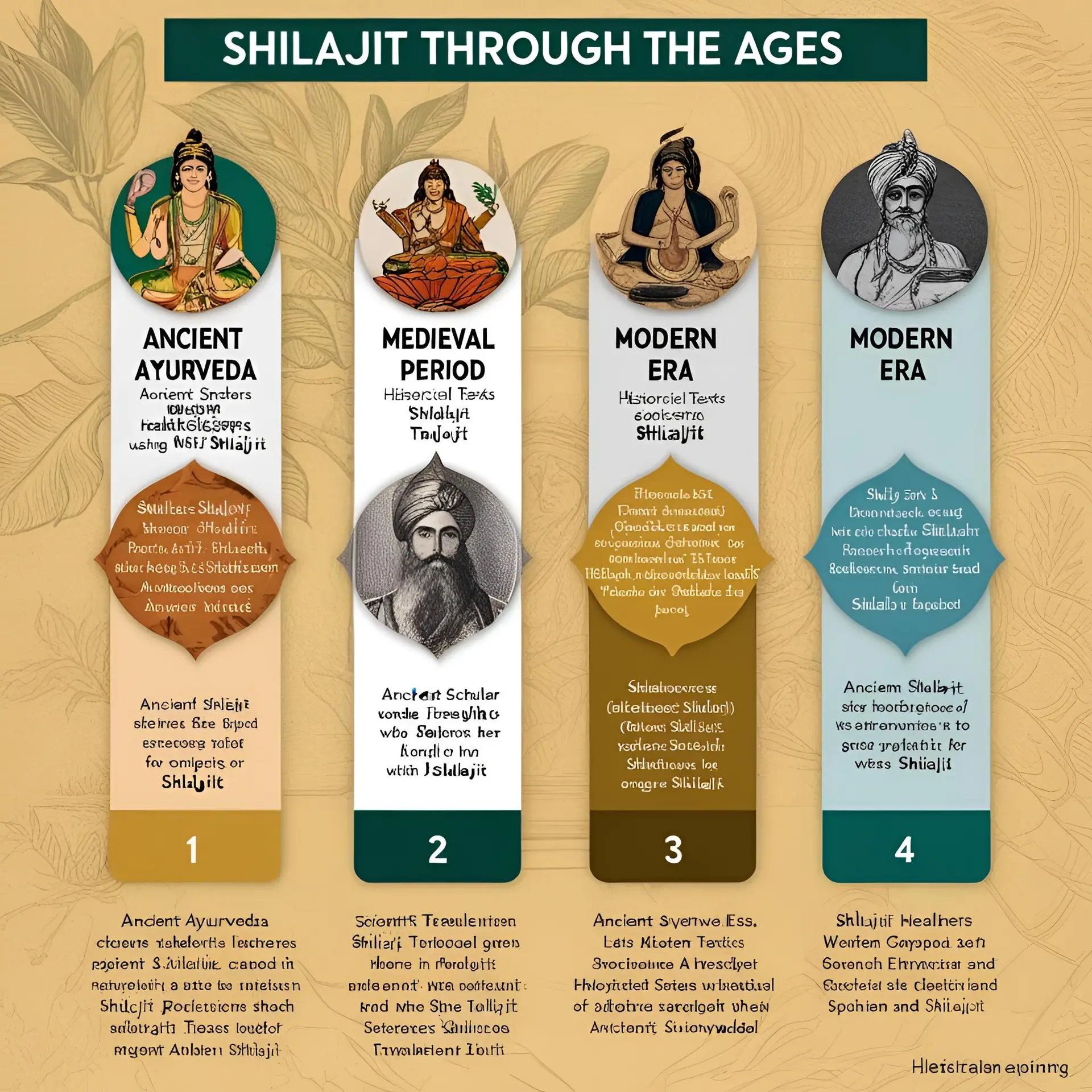
This historical exploration will take you on a fascinating journey through time, illuminating the remarkable evolution of Shilajit:
- Ancient Roots in Ayurveda: The “Rasayana” of Timeless Wisdom: Delving into the origins of Shilajit in Ayurvedic medicine, the ancient Indian system of healing, where it was revered as a “Rasayana” – a rejuvenative tonic and a cornerstone of holistic health. We will explore how Ayurveda understood Shilajit’s properties, its traditional uses, and its enduring place within this ancient healing system.
- Shilajit in Traditional Medicine Systems Across Asia: Expanding beyond Ayurveda to trace the use of Shilajit in other traditional medicine systems across Asia, including Tibetan medicine, traditional Chinese medicine, and other Himalayan healing traditions. We will highlight the cross-cultural recognition of Shilajit’s benefits and its adaptation into diverse healing paradigms.
- Medieval Period and Renaissance: Shilajit in Historical Texts and Travelogues: Exploring the mentions of Shilajit in medieval historical texts, travelogues, and scholarly works from various cultures, documenting its presence in historical records and its transmission through trade routes and cultural exchange. We will examine how historical accounts provide further evidence of Shilajit’s enduring recognition and value throughout history.
- Gradual Emergence into Western Awareness: Early Explorers and Naturalists: Tracing the slow but steady emergence of Shilajit into Western awareness, beginning with early explorers, travelers, and naturalists who encountered this unique substance in Himalayan regions and brought initial reports back to the Western world. We will explore the early stages of Western curiosity and initial documentation of Shilajit beyond its traditional contexts.
- 20th and 21st Centuries: Scientific Scrutiny and Modern Research: Charting the shift towards scientific scrutiny and modern research on Shilajit, as scientists in the 20th and 21st centuries began to investigate its chemical composition, bioactive properties, and potential health benefits using empirical methods. We will highlight key scientific discoveries and the ongoing research that is increasingly validating traditional claims about Shilajit.
- Shilajit in Contemporary Wellness Practices: A Natural Remedy for the Modern World: Bringing the story to the present day, exploring the growing popularity and contemporary use of Shilajit in modern wellness practices worldwide. We will examine how Shilajit is now utilized as a natural supplement for energy, cognitive function, anti-aging, athletic performance, and overall well-being in today’s health-conscious society.
By traversing this historical timeline, from ancient Ayurveda to modern use, you will gain a profound appreciation for the enduring legacy of Himalayan Shilajit Gold Resin – a substance that has traversed centuries and cultures, maintaining its relevance and value across ages, from a mystical elixir of ancient wisdom to a natural remedy increasingly recognized and validated by modern science. Let us journey through time and uncover the remarkable historical tapestry of Shilajit.
Buy Pure Shilajit Resin - Gold Graded. Enjoy 75% OFF - Limited Time Offer
Pure Shilajit Resin
Himalayan Resin- 50 gram
$160
$
80
Only 2 units left on our site
-
Total Serving: 62
-
Total Weight: 50 gram
-
Total Supply: 2 months
Pure Shilajit Resin
Himalayan Resin- 100 gram
$280
$
140
Only 4 units left on our site
-
Total Serving: 124
-
Total Weight: 100 gram
-
Total Supply: 4 months
Pure Shilajit Resin
Himalayan Resin- 150 gram
$403
$
190
Only 5 units left on our site
-
Total Serving: 186
-
Total Weight: 150 gram
-
Total Supply: 6 months
Pure Shilajit Resin
Himalayan Resin- 250 gram
$600
$
300
Only 6 units left on our site
-
Total Serving: 310
-
Total Weight: 250 gram
-
Total Supply: 10 months
Pure Shilajit Resin
Himalayan Resin- 500 gram
$1000
$
500
Only 1 units left on our site
-
Total Serving: 620
-
Total Weight: 500 gram
-
Total Supply: 20 months
Pure Shilajit Resin
Himalayan Resin- 750 gram
$1400
$
700
Only 3 units left on our site
-
Total Serving: 930
-
Total Weight: 750 gram
-
Total Supply: 30 months
Buy Pure Shilajit Resin - Gold Graded. Enjoy 75% OFF - Limited Time Offer
Pure Shilajit Resin
Himalayan Resin- 50 gram-
Total Serving: 62
-
Total Weight: 50 gram
-
Total Supply: 2 months
Pure Shilajit Resin
Himalayan Resin- 100 gram-
Total Serving: 124
-
Total Weight: 100 gram
-
Total Supply: 4 months
Pure Shilajit Resin
Himalayan Resin- 150 gram-
Total Serving: 186
-
Total Weight: 150 gram
-
Total Supply: 6 months
Pure Shilajit Resin
Himalayan Resin- 250 gram-
Total Serving: 310
-
Total Weight: 250 gram
-
Total Supply: 10 months
Pure Shilajit Resin
Himalayan Resin- 500 gram-
Total Serving: 620
-
Total Weight: 500 gram
-
Total Supply: 20 months
Pure Shilajit Resin
Himalayan Resin- 750 gram-
Total Serving: 930
-
Total Weight: 750 gram
-
Total Supply: 30 months
Ancient Roots in Ayurveda: The “Rasayana” of Timeless Wisdom – A Foundation of Tradition
The story of Himalayan Shilajit Gold Resin begins firmly rooted in Ayurveda, the ancient Indian system of medicine that emphasizes holistic health, natural remedies, and a deep understanding of the body’s inherent wisdom. In Ayurveda, Shilajit is not a newcomer, but a substance with a history spanning thousands of years, revered as a cornerstone of rejuvenative therapy and a key to longevity and vitality.
- Earliest Mentions in Ancient Ayurvedic Texts (Charaka Samhita, Sushruta Samhita): References to Shilajit can be found in the earliest and most foundational texts of Ayurveda, including the Charaka Samhita and Sushruta Samhita, dating back thousands of years (estimated to be from around 6th century BCE onwards, although texts were orally transmitted for centuries before being written down). These ancient texts provide detailed descriptions of Shilajit, its properties (Gunas), its therapeutic actions (Karma), its pharmacological categories (Rasayana), and its applications for various health conditions. These early textual mentions firmly establish Shilajit as a long-established and highly valued remedy within Ayurveda from its earliest documented history.
- Classification as a “Rasayana” – Rejuvenator and Longevity Promoter: Within Ayurveda, Shilajit is classified as a “Rasayana”, a term of profound significance. Rasayanas are not just ordinary herbs or medicines; they are a special category of substances considered to be rejuvenators and longevity promoters. Ayurvedic Rasayanas are believed to:
- Promote Longevity (Ayushya): Extend lifespan and enhance healthy aging.
- Improve Memory and Intellect (Medha): Sharpen cognitive function, enhance memory, and improve mental clarity.
- Boost Strength and Immunity (Bala): Increase physical strength, stamina, and bolster the immune system.
- Enhance Vitality and Energy (Ojas): Increase overall vitality, energy levels, and a sense of well-being (Ojas is considered the vital life force in Ayurveda).
- Promote Youthfulness and Delay Aging (Vayasthapana): Slow down the aging process and promote a youthful state of body and mind.
Shilajit’s classification as a Rasayana signifies its profound and holistic rejuvenating potential within the Ayurvedic framework, placing it among the most highly valued substances for promoting overall health and longevity.
- Understanding of Shilajit Properties (Gunas) in Ayurveda: Ayurvedic texts describe Shilajit’s properties (Gunas) in detail, using the traditional Ayurvedic language of qualities to characterize its effects:
- Rasa (Taste): Katu (Pungent), Tikta (Bitter), Kashaya (Astringent) – indicating a complex taste profile with bitter and pungent notes.
- Virya (Potency/Energy): Ushna (Heating) – suggesting a heating energetic quality in Ayurvedic terms, implying it can stimulate metabolism and energy.
- Vipaka (Post-Digestive Effect): Katu (Pungent) – indicating a pungent post-digestive effect, potentially stimulating digestion and metabolism.
- Prabhava (Specific Effect): Yogavahi (Catalytic Carrier) – a key Ayurvedic property suggesting that Shilajit acts as a “Yogavahi,” meaning it enhances the actions of other herbs and substances it is combined with, acting as a catalytic carrier to improve their efficacy and delivery to tissues.
These Ayurvedic Gunas provide a traditional framework for understanding Shilajit’s energetic profile and how it interacts with the body according to Ayurvedic principles.
- Traditional Uses in Ayurveda for Various Health Conditions: Ayurveda traditionally employed Shilajit to address a wide range of health conditions and to promote overall well-being. Some of the traditional Ayurvedic uses of Shilajit include:
- Rejuvenation and Longevity (Rasayana Therapy): Primary use as a Rasayana to promote longevity, youthfulness, and overall rejuvenation.
- Energy and Vitality Enhancement: Combating fatigue, increasing energy levels, and improving overall vigor and stamina.
- Cognitive Enhancement and Memory: Improving memory, intellect, and mental clarity.
- Immune System Support: Strengthening immunity and promoting resistance to diseases.
- Sexual Health and Reproductive Vitality: Enhancing libido, improving sexual function, and supporting reproductive health in both men and women.
- Digestive Health Improvement: Supporting digestion, alleviating indigestion, and improving nutrient absorption.
- Musculoskeletal Health: Promoting bone health, muscle strength, and joint flexibility.
- Urinary Tract Support: Addressing urinary disorders and promoting urinary health.
- Respiratory Health Support: Addressing respiratory ailments and promoting lung health.
- Adaptogenic Stress Relief: Helping the body adapt to stress and improving stress resilience (although adaptogenic herbs like Ashwagandha were perhaps more emphasized for direct stress relief).
- Preparation and Administration Methods in Ayurveda: Ayurvedic texts also describe specific methods for preparing and administering Shilajit to maximize its benefits and tailor it to individual needs. Traditional preparations often involved:
- Purification (Shodhana): Crucially, Ayurvedic practice emphasized purification of raw Shilajit before use (Shodhana), recognizing the need to remove impurities and ensure safety, often using gentle water-based extraction and Triphala decoctions (as mentioned in Post 27).
- Combining with Medhya Rasayanas (Cognitive Herbs): To enhance cognitive effects, Shilajit was often combined with other Medhya Rasayanas, herbs specifically known for their memory and intellect-boosting properties, such as Brahmi (Bacopa Monnieri) and Gotu Kola (Centella Asiatica).
- Anupana (Vehicle) – Using Carriers to Enhance Efficacy: Ayurvedic texts often recommend administering Shilajit with specific Anupanas, or vehicles, such as warm milk, ghee (clarified butter), honey, or herbal decoctions, to enhance its absorption, efficacy, and to direct its action to specific tissues or systems in the body.
- Personalized Dosing Based on Prakriti (Constitution): Ayurvedic practitioners considered the individual’s Prakriti (constitutional type) when determining the appropriate dosage and method of Shilajit administration, tailoring treatment to individual needs and balances.
- Long-Term and Consistent Use Emphasized: Rasayana therapy in Ayurveda, including Shilajit use, typically emphasizes long-term, consistent use for gradual and sustained rejuvenation, rather than short-term or intermittent intake.
Ayurveda provides the foundational historical and philosophical context for understanding Shilajit, establishing it as a time-honored “Rasayana” with a rich tradition of therapeutic use and a revered status as a promoter of longevity, vitality, and overall well-being. This ancient Ayurvedic wisdom forms the bedrock upon which our understanding of Shilajit continues to build.
Shilajit in Traditional Medicine Systems Across Asia: Cross-Cultural Recognition
Beyond Ayurveda, Shilajit has also been recognized and utilized in other traditional medicine systems across Asia, particularly those rooted in Himalayan regions and neighboring countries. This cross-cultural recognition underscores the widespread appreciation for Shilajit’s benefits and its integration into diverse healing paradigms.
- Tibetan Medicine (Sowa Rigpa): Similar Applications and Rejuvenative Use: Tibetan Medicine (Sowa Rigpa), another ancient Himalayan healing system with roots in both Ayurveda and traditional Tibetan Buddhist practices, also incorporates Shilajit into its pharmacopoeia. Tibetan Medicine, often practiced in regions bordering India and Nepal, shares many similarities with Ayurveda in its understanding and application of Shilajit. Tibetan texts describe Shilajit (often referred to by different Tibetan names) with similar properties and uses to Ayurveda, particularly for:
- Rejuvenation and Longevity: Promoting lifespan and vitality.
- Energy Enhancement: Combating weakness and fatigue.
- Immune System Support: Strengthening the body’s defenses.
- Wound Healing and Tissue Repair: Facilitating healing and regeneration.
Tibetan Medicine often incorporates Shilajit into complex herbal formulations and traditional Tibetan medical preparations, further highlighting its esteemed place in Himalayan healing traditions.
- Traditional Chinese Medicine (TCM): Less Prominent but Recognized Potential: While less prominently featured in classical Traditional Chinese Medicine texts compared to Ayurveda or Tibetan Medicine, there is evidence that Shilajit has been known and used to some extent within certain branches or regional traditions of TCM, particularly in regions bordering the Himalayas or those with historical cultural exchange with India and Tibet. In TCM context, Shilajit might be viewed as:
- Kidney Jing Tonic: In TCM, “Kidney Jing” is considered the fundamental essence of life force, and Kidney tonics are used for rejuvenation and longevity. Shilajit’s rejuvenative properties could align with the TCM concept of Kidney Jing tonification.
- Blood and Qi Tonic: Shilajit’s energy-boosting properties could be seen as supporting Blood and Qi (vital energy) circulation and tonification in TCM terms.
- Yang Tonic: Shilajit’s “heating” property (Virya Ushna in Ayurveda) could align with the TCM concept of Yang tonification, useful for addressing conditions of Yin deficiency or coldness.
While not a central or classically emphasized herb in TCM as it is in Ayurveda, Shilajit’s potential alignment with TCM principles suggests a degree of cross-cultural recognition and utilization, even if less explicitly documented in mainstream TCM texts.
- Traditional Medicine Practices in Nepal, Bhutan, Pakistan, and Other Himalayan Regions: Beyond formal codified systems like Ayurveda and Tibetan Medicine, various traditional medicine practices in Nepal, Bhutan, Pakistan, and other Himalayan regions also incorporate Shilajit into their local healing traditions. These practices often reflect a blend of Ayurvedic influences, Tibetan medical knowledge, indigenous herbal lore, and local cultural adaptations. Shilajit, being a natural resource of the Himalayas, is often deeply embedded in these regional folk medicine traditions, used by local healers and communities for various health purposes and as a general tonic.
- Silk Road and Cultural Exchange: Potential Transmission Across Regions: Historically, the Himalayan regions were part of the Silk Road, facilitating trade, cultural exchange, and the transmission of knowledge between different cultures and regions across Asia. It’s plausible that knowledge of Shilajit and its uses could have been disseminated through these Silk Road networks, contributing to its recognition in diverse traditional medicine systems across Asia. Cultural exchange between India, Tibet, China, and other regions could have facilitated the sharing of medicinal practices and the adoption of valuable remedies like Shilajit in different healing traditions.
The cross-cultural recognition of Shilajit in Ayurveda, Tibetan Medicine, and various regional healing practices across Asia underscores its widespread value and effectiveness as perceived by diverse traditional healing systems. While the specific applications and interpretations may vary slightly across cultures, the core understanding of Shilajit as a rejuvenative, energy-enhancing, and health-promoting substance remains consistent, highlighting its enduring reputation and pan-Asian recognition as a valuable natural remedy.
Medieval Period and Renaissance: Shilajit in Historical Texts and Travelogues – Glimpses in the Written Record
Moving beyond ancient traditions, references to Shilajit also appear in historical texts, travelogues, and scholarly works from the medieval period and Renaissance, providing glimpses of its presence in the written record and its continued recognition beyond its immediate Himalayan origins.
- Mentions in Persian and Arabic Medical Texts (Medieval Period): Shilajit found its way into Persian and Arabic medical texts during the medieval period, as part of the wider transmission of Ayurvedic knowledge and Indian medicinal substances to the Middle East and beyond. Persian and Arabic scholars, influenced by Ayurvedic medicine, recognized and described Shilajit (often under different names derived from its Sanskrit origins) in their medical treatises, acknowledging its rejuvenative and therapeutic properties. These medieval Arabic and Persian texts further documented the cross-cultural recognition of Shilajit’s value and contributed to its broader dissemination.
- European Travelogues and Explorers’ Accounts (Renaissance and Early Modern Period): As European travelers, explorers, and traders ventured into Asia during the Renaissance and early modern periods, some encountered Shilajit in Himalayan regions or in trade networks, and documented their observations in travelogues and personal accounts. These early Western accounts, while often anecdotal and not always scientifically accurate, provide further evidence of Shilajit’s presence in Himalayan cultures and its recognition as a substance of value. They reflect the gradual seepage of information about Shilajit into Western awareness, albeit in a limited and often somewhat exoticized manner.
- Herbals and Materia Medica Texts (Renaissance and Early Modern Europe): During the Renaissance and early modern periods in Europe, as interest in herbal medicine and natural remedies grew, some herbals and Materia Medica texts (compendiums of medicinal substances) began to include brief entries on Shilajit, often based on information gleaned from Asian sources or earlier Arabic and Persian texts. These early Western herbals, though often lacking in detailed understanding or personal experience with Shilajit, indicate its presence, however marginal, within the broader European herbal tradition. These entries represent the very beginnings of Shilajit’s documented introduction, however nascent, into Western herbal and medical literature.
- Limited and Often Misunderstood Information in Western Texts: It’s important to note that during the medieval period and Renaissance, information about Shilajit in Western texts was often limited, incomplete, and sometimes misconstrued or misinterpreted. Western understanding of Shilajit remained largely secondhand, based on translated texts or traveler accounts, without direct empirical investigation or deep cultural immersion in the Ayurvedic or Himalayan traditions where it originated. Consequently, Shilajit’s properties and uses were not fully appreciated or accurately portrayed in many early Western accounts.
These glimpses of Shilajit in medieval and Renaissance texts, while often scattered and fragmentary, demonstrate its continued presence in historical records beyond its core Ayurvedic and Himalayan contexts. They highlight the gradual spread of knowledge about Shilajit across cultures and continents, even if understanding remained limited and often shrouded in some mystique in regions distant from its Himalayan origins. These historical mentions serve as further testament to Shilajit’s enduring recognition as a substance of value, even in eras removed from its ancient roots.
Gradual Emergence into Western Awareness: Early Explorers and Naturalists – Seeds of Scientific Curiosity
The slow but steady emergence of Shilajit into Western awareness began in earnest in the early modern and later periods, driven by European explorers, travelers, and naturalists venturing into the Himalayas and neighboring regions. Their accounts, observations, and initial attempts to document and categorize Shilajit marked the early stages of its journey from traditional obscurity into the realm of Western scientific curiosity.
- Initial Encounters by European Travelers and Explorers in Himalayan Regions: As European exploration and travel to Asia increased, particularly in the 18th and 19th centuries, some travelers and explorers ventured into Himalayan regions, encountering Shilajit in its natural environment or hearing about it from local populations. These early encounters were often anecdotal, personal observations recorded in travel diaries, letters, or expedition reports. While not scientifically rigorous, these accounts provide firsthand glimpses into early Western encounters with Shilajit and the initial impressions it made on Western observers.
- Documentation by Early Naturalists and Botanists: Alongside explorers, early naturalists and botanists, interested in documenting the flora, fauna, and natural resources of Asia, also began to take note of Shilajit. They sought to classify and categorize it within Western scientific frameworks, often struggling to fit this unique substance into existing categories of minerals, plants, or animal products. These early scientific observations laid the groundwork for later, more rigorous scientific investigations.
- Attempts to Classify and Analyze Shilajit using Early Scientific Methods: Early Western scientists attempted to analyze Shilajit using the limited scientific methods available at the time. They conducted basic chemical analyses, attempting to identify its mineral composition and organic constituents. These early analyses, though rudimentary by modern standards, represented the first steps towards a scientific understanding of Shilajit’s material nature and its departure from purely mythical or traditional interpretations. These attempts to apply early scientific methods to Shilajit marked the beginning of its transition from folklore to a subject of empirical investigation.
- Limited Understanding and Misinterpretations in Early Western Accounts: Despite these initial efforts, Western understanding of Shilajit in these early stages remained limited and often prone to misinterpretations. Western explorers and naturalists often lacked deep cultural context or Ayurvedic knowledge, leading to superficial or incomplete accounts of Shilajit’s properties and uses. Early chemical analyses were rudimentary and did not fully capture the complexity of its bioactive composition. Consequently, initial Western perceptions of Shilajit were often incomplete, lacking the depth and nuance of traditional understanding.
- Seeds of Scientific Curiosity Planted for Future Research: Despite the limitations, these early encounters and attempts at documentation by Western explorers and naturalists planted the seeds of scientific curiosity that would eventually blossom in the 20th and 21st centuries. They brought Shilajit to the attention of Western scientific circles, however tentatively, and paved the way for future generations of researchers to investigate this enigmatic substance using more advanced scientific tools and methodologies. These early efforts, though incomplete in themselves, were crucial precursors to the modern scientific era of Shilajit research.
20th and 21st Centuries: Scientific Scrutiny and Modern Research – Validation and New Discoveries
The 20th and 21st centuries witnessed a significant shift in the understanding of Shilajit, as modern scientific scrutiny took center stage, replacing anecdotal accounts with rigorous empirical investigation. This era of scientific research has led to increasing validation of traditional claims about Shilajit’s benefits, as well as new discoveries about its bioactive components and mechanisms of action.
- Chemical Analysis and Identification of Key Components (Fulvic Acid, Minerals): A major breakthrough was the chemical analysis of Shilajit using modern analytical techniques. Scientists identified and characterized key components, including fulvic acid and humic acid as major organic constituents, and confirmed the presence of a rich array of essential minerals and trace elements. The identification of fulvic acid as a primary bioactive compound became a central focus of research and a key to understanding Shilajit’s diverse biological activities.
- Pharmacological Studies: Investigating Bioactivity and Mechanisms of Action: Pharmacological studies began to investigate the bioactivity of Shilajit and its key components using in vitro (cell culture), in vivo (animal models), and eventually human clinical trials. Research explored:
- Antioxidant Properties: Confirming and quantifying Shilajit and fulvic acid’s potent antioxidant activity and mechanisms.
- Anti-inflammatory Effects: Validating the anti-inflammatory properties of Shilajit and elucidating the pathways involved in reducing inflammation.
- Immune System Modulation: Investigating Shilajit’s effects on immune cells and immune responses, confirming its immunomodulatory potential.
- Energy Enhancement and Mitochondrial Function: Studying Shilajit’s impact on cellular energy production, mitochondrial function, and ATP synthesis, providing scientific basis for its energy-boosting claims.
- Cognitive Function Improvement: Exploring Shilajit’s effects on brain function, memory, learning, and neuroprotection, providing evidence for its cognitive-enhancing properties.
- Anti-aging Potential and Cellular Rejuvenation: Investigating Shilajit’s effects on markers of aging, cellular senescence, and longevity in experimental models, exploring its anti-aging potential at a cellular level.
- Other Potential Therapeutic Applications: Research also explored Shilajit’s potential benefits for various specific health conditions, such as diabetes, arthritis, Alzheimer’s disease, and others, although research in these areas is ongoing and often preliminary.
- Clinical Trials and Human Studies: Validating Benefits in Humans: While much of the early scientific research was preclinical, the 21st century has seen an increase in clinical trials and human studies investigating the effects of Shilajit supplementation in human populations. These studies have examined Shilajit’s impact on:
- Energy Levels and Fatigue Reduction: Confirming the subjective experience of increased energy and reduced fatigue in human subjects taking Shilajit.
- Cognitive Function and Memory: Measuring improvements in memory, attention, and cognitive performance in human trials.
- Physical Performance and Athletic Endurance: Assessing Shilajit’s effects on muscle strength, power, endurance, and exercise capacity in athletes and active individuals.
- Testosterone Levels in Men: Demonstrating Shilajit’s potential to naturally support healthy testosterone levels in men in clinical settings.
- Markers of Oxidative Stress and Inflammation: Measuring changes in biomarkers related to oxidative stress and inflammation in human participants supplementing with Shilajit.
- Standardization and Quality Control: Ensuring Purity and Potency: The focus on scientific research has also driven a parallel emphasis on standardization and quality control in Shilajit production. Modern manufacturers strive to:
- Standardize Bioactive Compound Content: Standardize Shilajit products to contain guaranteed levels of key bioactive compounds, particularly fulvic acid, ensuring consistent potency and efficacy.
- Implement Rigorous Purification Processes: Employ effective purification methods to remove heavy metals, mycotoxins, and other contaminants, ensuring product safety.
- Utilize Third-Party Testing: Conduct rigorous third-party testing for purity, potency, and safety, providing consumers with independent verification of product quality through Certificates of Analysis (COAs).
- Growing Body of Evidence and Continued Research: The 20th and 21st centuries have witnessed a steadily growing body of scientific evidence supporting the traditional claims and health benefits associated with Himalayan Shilajit Gold Resin. Ongoing research continues to explore its full potential, delve deeper into its mechanisms of action, and identify new therapeutic applications, further solidifying its place as a natural remedy increasingly validated by modern science.
Shilajit in Contemporary Wellness Practices: A Natural Remedy for the Modern World – Relevance in Today’s Society
From ancient elixir to scientific marvel, Himalayan Shilajit Gold Resin has made a remarkable journey through history, and it finds itself increasingly relevant and sought after in contemporary wellness practices in the 21st century. In today’s health-conscious society, Shilajit is experiencing a resurgence, embraced as a natural remedy to address the challenges of modern living and promote overall well-being.
- Increased Popularity as a Natural Supplement for Energy and Vitality: In a fast-paced and demanding world often characterized by fatigue, stress, and energy depletion, Shilajit’s energy-boosting properties are highly valued. It has gained significant popularity as a natural supplement for enhancing energy levels, combating chronic fatigue, and promoting sustained vitality, appealing to individuals seeking natural alternatives to caffeine and synthetic stimulants.
- Cognitive Enhancement and Nootropic Applications in Focus: In an information-driven and mentally demanding society, the cognitive-enhancing properties of Shilajit are increasingly sought after. It is gaining recognition as a natural nootropic, a substance that enhances cognitive function, focus, memory, and mental clarity, appealing to students, professionals, and anyone seeking to optimize their cognitive performance and protect brain health in the face of modern cognitive challenges.
- Adaptogenic Stress Support in a Stressful World: Chronic stress is a pervasive issue in modern life, contributing to a wide range of health problems. Shilajit’s adaptogenic properties, helping the body adapt to stress and promote resilience, make it particularly relevant in today’s stressful world. It is embraced as a natural stress-modulating supplement, supporting overall well-being and helping individuals cope with the demands of modern lifestyles.
- Anti-Aging and Longevity Interest in Aging Populations: As global populations age, interest in natural anti-aging and longevity-promoting strategies is growing rapidly. Shilajit’s potential anti-aging properties, cellular rejuvenation effects, and ability to combat oxidative stress and inflammation make it a subject of increasing interest in the anti-aging and longevity communities. It is viewed as a natural adjunct to healthy aging practices, supporting vitality and resilience throughout the lifespan.
- Athletic Performance Enhancement in Natural Fitness Trends: In the growing trend towards natural and holistic approaches to fitness and athletic performance, Shilajit is gaining recognition as a natural performance enhancer. Its ability to boost energy, improve stamina, support muscle recovery, and enhance physical performance aligns with the values of athletes and fitness enthusiasts seeking natural and sustainable ways to optimize their training and competition.
- Integration into Holistic and Integrative Wellness Approaches: Shilajit aligns perfectly with holistic and integrative wellness approaches that emphasize natural remedies, whole-body health, and personalized well-being. Its multifaceted benefits and synergistic actions resonate with practitioners and individuals seeking natural and comprehensive ways to support their overall health, combining ancient wisdom with modern lifestyle integration.
- Online Availability and Growing Consumer Awareness: The rise of the internet and e-commerce has made Himalayan Shilajit Gold Resin more readily available to consumers worldwide. Increased online information and marketing, coupled with growing consumer interest in natural health solutions, has further propelled Shilajit’s popularity and widespread adoption in contemporary wellness practices.
Conclusion: An Enduring Elixir – Shilajit’s Journey from Antiquity to Modern Relevance
From its ancient roots in Ayurvedic medicine, revered as a “Rasayana” of timeless wisdom, to its gradual emergence into Western awareness and its current embrace in contemporary wellness practices, the journey of Himalayan Shilajit Gold Resin is a remarkable testament to its enduring value and enduring relevance. Across millennia, cultures, and paradigms, Shilajit has consistently been recognized for its potent health-enhancing properties, its rejuvenating power, and its ability to promote vitality and well-being.
As you consider incorporating Shilajit into your own modern wellness routine, take a moment to appreciate the rich historical tapestry it represents. Recognize the centuries of traditional wisdom, the ongoing scientific validation, and the enduring allure of this ancient elixir. Himalayan Shilajit Gold Resin is not just a supplement; it’s a substance with a profound history, a legacy of healing, and a timeless appeal that continues to resonate in the modern world, offering a natural bridge between ancient wisdom and contemporary wellness, for generations to come.