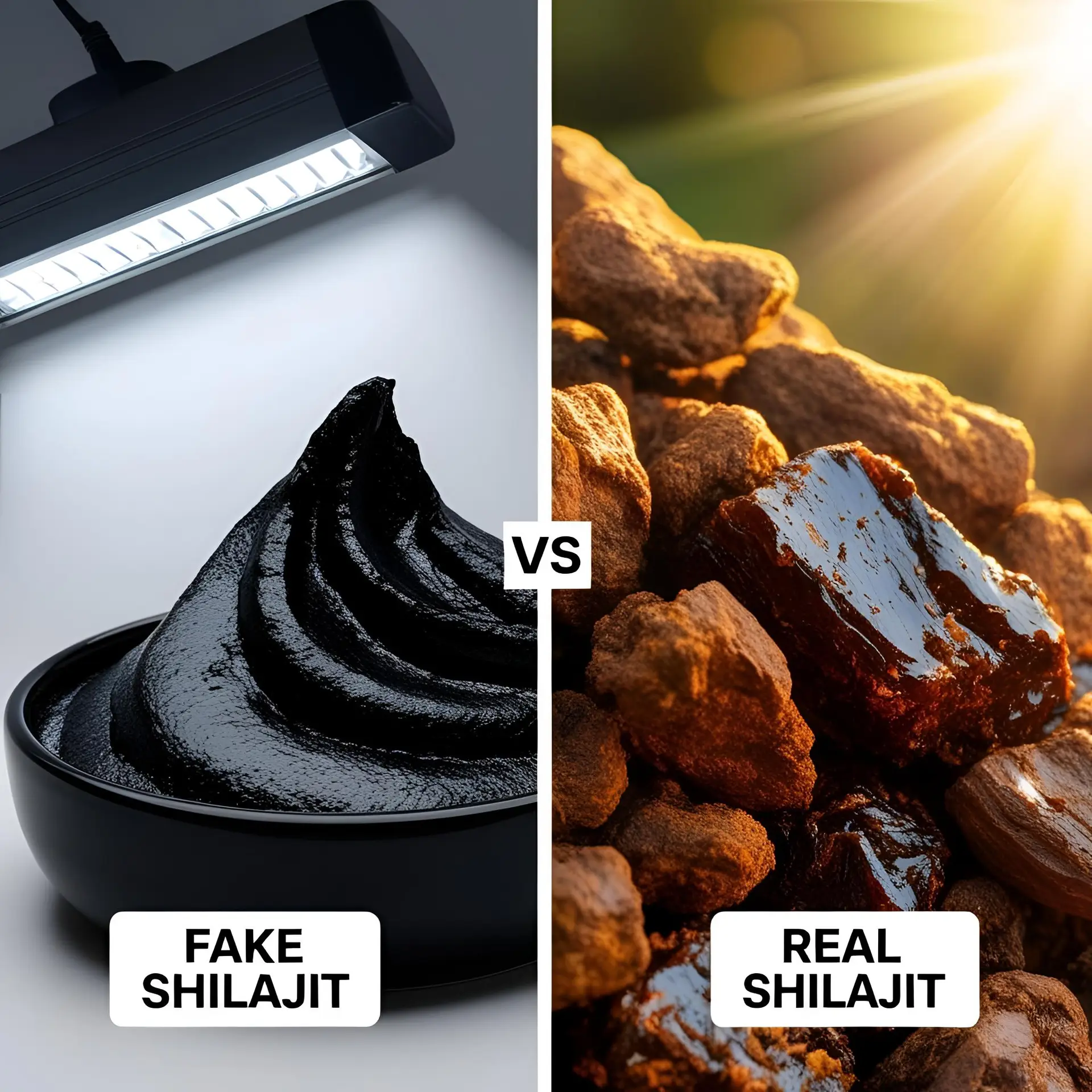
As you delve deeper into the world of Himalayan Shilajit, you’ll quickly discover a crucial reality: Not all Shilajit products are created equal. The market for Shilajit, like many natural supplements, is diverse, and unfortunately, it includes a wide spectrum of quality – ranging from exceptionally pure and potent Himalayan Shilajit Gold Resin to inferior, adulterated, and even fake products. Understanding these quality differences is not just a matter of product preference; it’s a critical factor that directly impacts the effectiveness, safety, and overall value of your Shilajit experience.
The vast disparities in Shilajit quality stem from various factors, starting with the very source and harvesting location, and extending through processing methods, purification techniques, quality control standards, and the ethical practices of different brands and producers. Navigating this complex landscape can be challenging for consumers, especially those new to Shilajit. Being able to discern high-quality Himalayan Shilajit Gold Resin from lower-quality or fraudulent products is essential for making informed choices, safeguarding your health, and ensuring you are truly investing in a product that will deliver on its promised benefits and ancient reputation.
This comprehensive guide will illuminate why not all Shilajit is created equal, unraveling the key factors that contribute to these quality variations and empowering you with the knowledge to become a discerning Shilajit consumer. We will explore:
Buy Pure Shilajit Resin - Gold Graded. Enjoy 75% OFF - Limited Time Offer
Pure Shilajit Resin
Himalayan Resin- 50 gram
$160
$
80
Only 2 units left on our site
-
Total Serving: 62
-
Total Weight: 50 gram
-
Total Supply: 2 months
Pure Shilajit Resin
Himalayan Resin- 100 gram
$280
$
140
Only 4 units left on our site
-
Total Serving: 124
-
Total Weight: 100 gram
-
Total Supply: 4 months
Pure Shilajit Resin
Himalayan Resin- 150 gram
$403
$
190
Only 5 units left on our site
-
Total Serving: 186
-
Total Weight: 150 gram
-
Total Supply: 6 months
Pure Shilajit Resin
Himalayan Resin- 250 gram
$600
$
300
Only 6 units left on our site
-
Total Serving: 310
-
Total Weight: 250 gram
-
Total Supply: 10 months
Pure Shilajit Resin
Himalayan Resin- 500 gram
$1000
$
500
Only 1 units left on our site
-
Total Serving: 620
-
Total Weight: 500 gram
-
Total Supply: 20 months
Pure Shilajit Resin
Himalayan Resin- 750 gram
$1400
$
700
Only 3 units left on our site
-
Total Serving: 930
-
Total Weight: 750 gram
-
Total Supply: 30 months
Buy Pure Shilajit Resin - Gold Graded. Enjoy 75% OFF - Limited Time Offer
Pure Shilajit Resin
Himalayan Resin- 50 gram-
Total Serving: 62
-
Total Weight: 50 gram
-
Total Supply: 2 months
Pure Shilajit Resin
Himalayan Resin- 100 gram-
Total Serving: 124
-
Total Weight: 100 gram
-
Total Supply: 4 months
Pure Shilajit Resin
Himalayan Resin- 150 gram-
Total Serving: 186
-
Total Weight: 150 gram
-
Total Supply: 6 months
Pure Shilajit Resin
Himalayan Resin- 250 gram-
Total Serving: 310
-
Total Weight: 250 gram
-
Total Supply: 10 months
Pure Shilajit Resin
Himalayan Resin- 500 gram-
Total Serving: 620
-
Total Weight: 500 gram
-
Total Supply: 20 months
Pure Shilajit Resin
Himalayan Resin- 750 gram-
Total Serving: 930
-
Total Weight: 750 gram
-
Total Supply: 30 months
- Himalayan Origin and Altitude: The Foundation of Quality – Not All Shilajit is From the Himalayas. Highlighting why authentic Himalayan Shilajit Gold Resin, sourced from specific high-altitude regions within the Himalayas, is considered the gold standard of quality, and explaining why Shilajit from other regions may not possess the same unique composition and therapeutic properties.
- Harvesting Practices and Resin Selection: Traditional Methods vs. Mass Production. Examining the differences between traditional, manual harvesting methods, focused on quality and purity, versus less scrupulous or mass-production oriented harvesting that may compromise quality and authenticity.
- Purification Methods: Essential for Safety and Potency – Gentle vs. Harsh Processing. Detailing why purification is crucial for safety and potency (as discussed in Post 27), and comparing reputable, gentle purification methods (like water extraction) to potentially less desirable or harsh chemical-based processing techniques that can degrade quality and leave residues.
- Fulvic Acid Content: A Key Marker of Potency and Quality – Natural Variation and Standardization. Explaining why fulvic acid content is a significant marker of Shilajit potency and quality, and highlighting the differences between naturally varying levels in raw Shilajit and the value of standardized products that guarantee a consistent and verified percentage of fulvic acid.
- Mineral Composition and Bioavailability: Natural Richness vs. Inferior Products. Discussing the naturally rich and bioavailable mineral profile of high-quality Himalayan Shilajit Gold Resin, and contrasting this with lower-quality products that may lack this comprehensive mineral spectrum or contain minerals in less bioavailable forms.
- Third-Party Testing and Certificates of Analysis (COA): The Gold Standard of Verification. Emphasizing the paramount importance of third-party testing and readily accessible Certificates of Analysis (COAs) as the ultimate verification of Shilajit purity, potency, and safety, and explaining what key information to look for in COAs to ensure product quality.
- Brand Reputation and Transparency: Choosing Trustworthy Sources. Highlighting the importance of selecting Shilajit products from reputable brands with a proven track record of quality, transparency, and ethical sourcing practices, and providing guidance on how to assess brand reputation and trustworthiness.
- Price as an Indicator (Often, But Not Always): Quality Comes at a Price. Addressing the often-asked question of price and quality, explaining why extremely cheap Shilajit products are often red flags for low quality or counterfeiting, and suggesting that a slightly higher price point is often indicative of a more carefully sourced, processed, and high-quality product.
By decoding these crucial quality differences and understanding the factors that set high-quality Himalayan Shilajit Gold Resin apart, you will be empowered to navigate the complexities of the Shilajit market with greater confidence, discern the “gold standard” from inferior imitations, and invest in a product that truly delivers on its promises of safety, efficacy, and authentic Himalayan potency. Let’s unlock the secrets to Shilajit quality and ensure you always get the real deal.
Himalayan Origin and Altitude: The Premier Source – Terroir and Altitude Matter
The Himalayan origin and harvesting altitude of Shilajit are not mere marketing claims; they are fundamental determinants of quality, influencing its composition, purity, and therapeutic properties. Himalayan Shilajit Gold Resin, sourced from specific high-altitude regions within the Himalayas, is widely considered the premier source and the gold standard of quality.
- Unique Himalayan Terroir: Geology, Climate, and Ecosystem. As discussed in Post 24 and Post 22, the Himalayan region possesses a unique terroir, encompassing specific geological formations, high-altitude climate, pristine ecosystems, and microbial communities that contribute to the distinctive characteristics of Shilajit formed there. This Himalayan terroir, shaped by millions of years of natural processes, is not easily replicated in other mountainous regions, making Himalayan Shilajit inherently unique and potentially more potent.
- High-Altitude Harvesting: Purity and Potency Enhancement: Shilajit harvested from the highest altitudes within the Himalayas (typically above 10,000 feet or 3,000 meters) is often considered to be of superior quality. High-altitude harvesting is associated with:
- Greater Purity: Less exposure to pollution and human contaminants at higher elevations.
- Potentially Higher Concentration of Bioactive Compounds: The harsh climate and extreme conditions may concentrate certain bioactive components in the Shilajit resin.
- More Rigorous Harvesting Process: Harvesting at extreme altitudes is inherently more challenging, often implying a more dedicated and quality-focused approach from harvesters and producers.
- Shilajit from Other Regions (Lower Quality or Different Composition): While substances marketed as “Shilajit” may be found in other mountainous regions beyond the Himalayas (e.g., Russia’s Altai Mountains, Caucasus Mountains, Andes Mountains), these are generally not considered to be of comparable quality to authentic Himalayan Shilajit Gold Resin. Shilajit from other regions may:
- Have Different Mineral Compositions: Reflecting the distinct geology of those regions.
- Lack the Same Bioactive Compound Profile: Potentially having lower levels or different types of fulvic acid and other key components.
- Be Subject to Different Environmental Contaminants: Depending on the environmental conditions of those specific regions.
Therefore, Himalayan origin is a crucial quality indicator, and Himalayan Shilajit Gold Resin is widely regarded as the benchmark for purity and efficacy. Be wary of products that do not clearly specify Himalayan origin or are sourced from other regions with less established reputations for Shilajit quality.
Harvesting Practices: Traditional vs. Mass Production – Impact on Quality and Ethics
The harvesting practices employed for Shilajit have a direct impact on its quality, sustainability, and ethical considerations. Understanding the differences between traditional, manual harvesting and more commercially driven, mass-production approaches is crucial for discerning quality and supporting responsible sourcing.
- Traditional Manual Harvesting (Small-Scale, Quality Focused): As detailed in Post 23, traditional Himalayan Shilajit harvesting is a manual, skilled, and labor-intensive process, typically characterized by:
- Small-Scale and Sustainable Practices: Focusing on harvesting only limited quantities from specific, known sites, allowing for natural replenishment of the resource.
- Experienced Harvesters and Traditional Knowledge: Relying on skilled harvesters who possess generations of traditional knowledge about harvesting techniques, quality identification, and sustainable practices.
- Emphasis on Purity and Resin Selection: Prioritizing the selective harvesting of only the purest, highest quality resin, minimizing contamination and leaving behind lower-grade or impure material.
- Respectful and Minimal Impact on Environment: Practicing environmentally conscious harvesting techniques that minimize disturbance to the fragile Himalayan ecosystems.
- Higher Labor Costs and Limited Yields: Involving significant manual labor and resulting in relatively limited yields compared to mass-production approaches.
Traditional manual harvesting often prioritizes quality, purity, sustainability, and ethical sourcing over maximizing quantity and minimizing costs.
- Mass-Production and Commercial Harvesting (Potential Compromises): In contrast to traditional practices, some commercially driven Shilajit production may prioritize mass production and cost-cutting, potentially compromising quality and sustainability. Mass-production oriented harvesting may involve:
- Larger-Scale and Less Selective Harvesting: Collecting larger quantities, potentially including lower-grade resin or resin from less pristine locations.
- Less Skilled Labor and Reduced Emphasis on Quality Selection: Employing less skilled labor and potentially reduced focus on meticulous resin selection and quality control.
- Potentially Increased Environmental Impact: Less mindful harvesting practices that could have a greater impact on the fragile Himalayan environment, if not managed sustainably.
- Lower Labor Costs and Increased Yields, Potentially at the Expense of Quality: Prioritizing maximizing yields and minimizing labor costs, which could inadvertently lead to compromises in product quality and authenticity.
Mass-production oriented Shilajit, while potentially more readily available and cheaper, may not adhere to the same quality standards, ethical considerations, and environmental sustainability as traditionally harvested Himalayan Shilajit Gold Resin.
Purification Methods: Gentle vs. Harsh Processing – Preserving Bioactivity and Purity
The purification methods used to process raw Shilajit are crucial for safety and also significantly impact the quality and integrity of the final product. Discerning between gentle, reputable purification techniques and potentially harsher or less desirable methods is essential.
- Reputable, Gentle Purification Methods (Water Extraction, Filtration – as discussed in Post 27): Reputable producers of Himalayan Shilajit Gold Resin typically employ purification methods that are gentle, natural, and water-based, such as water extraction and filtration. These methods effectively remove impurities while preserving the natural integrity and bioactivity of the resin. Water extraction is a time-honored Ayurvedic technique and is considered a gold standard for Shilajit purification. Filtration, especially advanced multi-stage filtration, can further enhance purity and remove finer particles.
- Potentially Undesirable or Harsh Purification Methods (Chemical Solvents, Excessive Heat – To Be Wary Of): Some less scrupulous or lower-cost producers may employ purification methods that involve harsh chemicals, organic solvents, or excessive heat to expedite processing or reduce costs. These methods are less desirable and can potentially compromise quality:
- Harsh Chemicals and Organic Solvents: Using chemicals like methanol, ethanol, or other organic solvents may leave undesirable residues in the final product, compromising purity and safety. These methods may also extract non-desirable components or alter the natural composition of Shilajit.
- Excessive Heat Processing: High temperatures during processing can degrade sensitive bioactive compounds, particularly fulvic acid, reducing the potency and therapeutic efficacy of Shilajit. Gentle, low-temperature methods are preferred to preserve bioactivity.
- Transparency About Purification Methods: A Key Quality Indicator: Reputable brands are generally transparent about their purification methods, clearly stating on their websites or product materials that they use water extraction, filtration, or other gentle, natural techniques. Lack of transparency or vague descriptions of purification methods can be a red flag, potentially indicating the use of less desirable processes.
- “Raw” or “Unprocessed” Marketing Claims – Often Misleading Regarding Safety: Products marketed as “raw” or “unprocessed” Shilajit may attempt to capitalize on the “natural is best” appeal, but this can be misleading and potentially deceptive, particularly if they imply that raw Shilajit is superior or safer than purified forms. As discussed in Post 27, raw Shilajit is not safe for direct consumption, and “raw” claims may be used to avoid the costs and efforts of proper purification, potentially sacrificing both safety and quality.
Fulvic Acid Content: A Key Potency Marker – Natural Variation and Standardization Benefits
Fulvic acid content is widely recognized as a key marker of Shilajit potency and overall quality. Understanding the nuances of fulvic acid levels and the benefits of standardization is essential for discerning quality differences.
- Fulvic Acid: Primary Bioactive Compound and Potency Driver: As detailed in Post 26, fulvic acid is often considered the primary bioactive component of Shilajit, responsible for many of its health-enhancing properties. Higher fulvic acid content generally correlates with greater potential potency and effectiveness.
- Natural Variation in Fulvic Acid Levels in Raw Shilajit: It’s important to recognize that natural levels of fulvic acid in raw Shilajit can vary depending on the specific Himalayan source, harvesting location, and even seasonal factors. Raw Shilajit is a natural substance, and its composition is not perfectly uniform or standardized in nature. Natural variations in fulvic acid levels are to be expected in unprocessed resin.
- Standardized Fulvic Acid Content in High-Quality Products (e.g., 40% – 70%+): Reputable brands of Himalayan Shilajit Gold Resin often standardize their purified products to contain a guaranteed percentage of fulvic acid, typically ranging from 40% to 70% or even higher. Standardization means that every batch of product is tested to ensure it consistently meets this specified fulvic acid level, providing consumers with greater assurance of potency and consistent dosing. This standardization process often involves concentrating fulvic acid during purification.
- Advantages of Standardized Fulvic Acid: Consistent Potency and Dosage Control: Standardization of fulvic acid content offers several advantages for consumers:
- Guaranteed Potency: You know you are consistently receiving a minimum level of this key bioactive compound in every dose.
- Dosage Control: Standardization makes it easier to control and track your daily intake of fulvic acid, ensuring consistent dosing for optimal benefits.
- Reliability and Predictability: Standardized products are more reliable and predictable in their effects compared to raw or unstandardized Shilajit, where fulvic acid content may be variable and less certain.
- Lower Fulvic Acid Content in Lower-Quality Products (or Lack of Testing): Lower-quality Shilajit products may have significantly lower levels of fulvic acid compared to high-quality Gold Resin, reducing their potential potency. These products may not undergo standardized testing or provide any guarantees about fulvic acid content. Lack of fulvic acid standardization or very low guaranteed levels (e.g., below 30%) can be a quality red flag.
Mineral Composition and Bioavailability: Natural Richness vs. Inferior Products – Completeness and Absorbability
The mineral composition and bioavailability of minerals in Shilajit are also crucial quality differentiators. High-quality Himalayan Shilajit Gold Resin boasts a naturally rich and bioavailable spectrum of essential minerals, while lower-quality products may fall short in this regard.
- Rich and Comprehensive Mineral Profile in High-Quality Himalayan Shilajit: As detailed in Post 26, high-quality Himalayan Shilajit Gold Resin is naturally rich in a wide and comprehensive spectrum of essential minerals and trace elements, reflecting its mineral-rich Himalayan origins. This includes macrominerals (magnesium, calcium, etc.) and numerous trace minerals vital for health. A complete and balanced mineral profile is a hallmark of authentic Himalayan Shilajit.
- Ionic Bioavailability: Minerals in a Readily Absorbable Form: The minerals in high-quality Himalayan Shilajit are believed to be present in a highly bioavailable ionic form, which is thought to significantly enhance their absorption and cellular utilization (as discussed in Post 26). Ionic bioavailability is a key advantage for mineral effectiveness and is a characteristic of authentic, naturally formed Shilajit minerals.
- Lower Mineral Content or Incomplete Profiles in Inferior Products: Lower-quality Shilajit products may have a less comprehensive mineral profile, containing lower amounts of essential minerals or lacking certain trace elements altogether. These products may not undergo mineral analysis or standardization to verify mineral richness and completeness.
- Less Bioavailable Mineral Forms in Synthetic or Adulterated Products: Some adulterated or synthetic “Shilajit” products may be created by artificially mixing mineral powders with resinous substances. Minerals in these synthetic products may be in less bioavailable inorganic forms (e.g., simple mineral salts), rather than the naturally complexed and ionic forms found in authentic Himalayan Shilajit, reducing their absorbability and potential effectiveness.
- Mineral Testing and Analysis (COA): Verification of Mineral Richness: Reputable brands that prioritize mineral quality often conduct mineral testing and analysis of their Shilajit products, providing detailed mineral profiles on their Certificates of Analysis (COAs). Looking for mineral testing data on COAs can provide further assurance of the mineral richness and completeness of a Shilajit product, verifying its high quality and Himalayan origin.
Third-Party Testing and Certificates of Analysis (COA): The Ultimate Verification Tool – Insist on Transparency
Third-party testing and Certificates of Analysis (COAs) are absolutely essential tools for verifying the quality, purity, potency, and safety of Himalayan Shilajit Gold Resin, and for distinguishing high-quality products from inferior imitations. Insist on COAs as a non-negotiable requirement when choosing Shilajit.
- Independent Verification by Third-Party Labs: Third-party testing means that a brand sends samples of its Shilajit products to an independent laboratory, not affiliated with the brand itself, to conduct comprehensive testing and analysis. This third-party verification ensures objectivity and unbiased results, providing consumers with credible and reliable quality assurance.
- Key Tests Covered in COAs for Shilajit: Reputable COAs for Himalayan Shilajit Gold Resin should include testing for:
- Heavy Metals (Lead, Arsenic, Mercury, Cadmium): Crucial for verifying safety and confirming that heavy metal levels are below safe limits.
- Mycotoxins (Mold and Fungal Toxins): Ideally, COAs should also include mycotoxin testing to rule out fungal contamination.
- Fulvic Acid Content (%): Verification of the standardized percentage of fulvic acid, confirming potency.
- Mineral Profile (Optional but Beneficial): Some high-quality COAs may also include a detailed mineral profile, listing the presence and amounts of various minerals.
- Purity and Authenticity Testing (Optional): Some advanced testing methods may be used to further verify the authenticity of Himalayan Shilajit and differentiate it from potential imitations.
- Microbial Testing: Verification that the product meets safe microbial limits.
- Readily Accessible COAs from Reputable Brands (Website or Upon Request): Reputable brands that conduct thorough third-party testing will make their Certificates of Analysis (COAs) readily accessible to consumers. COAs should be available on the brand’s website (often on product pages or a dedicated “Quality” or “Testing” section) or readily provided upon request to customer service. Lack of readily accessible COAs is a major red flag.
- Interpreting COAs and Key Data Points: Look for “PASS” on Safety and Potency: Learn to interpret COAs and identify key data points:
- “PASS” for Heavy Metals: Ensure heavy metal testing results are listed as “PASS” or “ND” (Not Detected) or show values below safe limits (e.g., as defined by USP, Prop 65, or other recognized standards).
- “PASS” for Mycotoxins: Ideally, confirm “PASS” or “ND” for mycotoxin testing as well.
- Fulvic Acid Percentage (%): Note the fulvic acid content, aiming for products with standardized levels of 40% or higher for Gold Resin grade Shilajit.
- Testing Date and Lab Credibility: Check the testing date to ensure the COA is recent and relevant (within the last year). Verify that the testing lab is a reputable, independent, third-party laboratory.
Brand Reputation and Transparency: Trustworthiness and Ethical Sourcing
Choosing Shilajit from a reputable brand with a demonstrated commitment to quality, transparency, and ethical sourcing is another essential aspect of discerning high-quality products.
- Brands Specializing in Himalayan Shilajit (Expertise and Focus): Brands that specialize specifically in Himalayan Shilajit Gold Resin are often more trustworthy and knowledgeable about this unique substance. Specialization suggests expertise, focus on quality, and a deeper understanding of sourcing, harvesting, and processing best practices for authentic Himalayan Shilajit.
- Long-Standing Brands with Positive Customer Reviews: Established brands with a long history of providing natural health supplements and positive customer reviews are generally more reliable choices. Research brand reputation, read customer reviews, and look for consistent positive feedback regarding product quality, effectiveness, and customer service.
- Transparency About Sourcing, Harvesting, and Processing Practices: Reputable brands are transparent about their sourcing (Himalayan region specified), harvesting (emphasizing traditional or sustainable methods), and purification (describing gentle, water-based methods). Transparency builds trust and provides assurance about the brand’s commitment to quality and ethical practices.
- Ethical and Sustainable Sourcing Considerations: Look for brands that emphasize ethical and sustainable sourcing practices, ensuring fair wages for harvesters, environmentally responsible harvesting, and conservation of the Himalayan ecosystems from which Shilajit originates. Ethical and sustainable sourcing reflects a commitment to both product quality and responsible stewardship of natural resources.
- Customer Support and Responsiveness: A Sign of Commitment: Brands that offer responsive customer support and are willing to answer questions about their products, testing, and sourcing practices are generally more trustworthy. Good customer service reflects a commitment to customer satisfaction and product quality.
Price as an Indicator (Often, But Not Always): Quality Costs More – Avoid “Too Good to Be True” Deals
While price alone is not a definitive indicator of quality, it can often serve as a general guideline when navigating the Shilajit market. Authentic, high-quality Himalayan Shilajit Gold Resin, due to its sourcing, harvesting, purification, and testing requirements, is typically a premium product with a correspondingly higher price point compared to lower-quality or mass-produced imitations.
- Authentic Himalayan Shilajit is Not Cheap to Produce: Producing authentic Himalayan Shilajit Gold Resin of high quality involves significant costs associated with:
- Manual, Labor-Intensive Harvesting in Remote Himalayas: Harvesting is physically demanding, time-consuming, and often requires specialized skilled labor.
- Specialized Purification and Quality Control Processes: Reputable purification and testing add to production costs.
- Transportation from Remote Locations: Logistics and transportation from remote Himalayan regions are complex and costly.
These factors contribute to the higher price point of authentic, high-quality Himalayan Shilajit.
- Extremely Low Prices: A Red Flag for Potential Counterfeiting or Low Quality: Be wary of Shilajit products that are priced significantly lower than the market average. “Too good to be true” prices are often a red flag indicating potentially counterfeit, adulterated, or low-quality products that have cut corners on sourcing, purification, or testing. If a price seems unbelievably low, it likely is for a reason, and the reason is rarely in your favor as a consumer seeking quality and safety.
- “Value for Money,” Not Just “Cheapest Price”: Focus on Overall Value: Focus on finding products that offer value for money, not just the cheapest price available. Consider the overall value proposition: a slightly higher price for purified Himalayan Shilajit Gold Resin from a reputable brand with third-party testing and transparent sourcing is often a worthwhile investment in quality, safety, and long-term health benefits.
- Compare Prices Within Reputable Brands and Product Tiers: Compare prices among different brands and product tiers, but primarily focus on choosing from reputable brands that demonstrate a commitment to quality. Within reputable brands, price variations may reflect differences in fulvic acid concentration, quantity, or packaging, rather than fundamental quality discrepancies.
- Quality is an Investment in Your Health: View the slightly higher price of high-quality Himalayan Shilajit Gold Resin not as an expense, but as an investment in your health and well-being. The benefits of purity, potency, and safety far outweigh the small savings of choosing a lower-quality, potentially risky product.
Conclusion: Navigate Shilajit Quality with Knowledge and Discernment – Demand the Best
Not all Shilajit is created equal, and understanding the critical differences in quality is essential for becoming an informed and empowered consumer. From Himalayan origin and harvesting practices to purification methods, fulvic acid content, mineral richness, third-party testing, brand reputation, and price, a multitude of factors distinguish high-quality Himalayan Shilajit Gold Resin from inferior imitations. By equipping yourself with this knowledge and becoming a discerning Shilajit buyer, you can navigate the complexities of the market, prioritize purity and safety, and ensure you are investing in a product that truly delivers on its promises of efficacy, authenticity, and the time-honored wisdom of this ancient natural treasure. Demand the best for your health, insist on quality, and unlock the true potential of Himalayan Shilajit Gold Resin, the right way – with knowledge, discernment, and a commitment to uncompromising purity.